
Walt Disney: the dreamer who changed the world
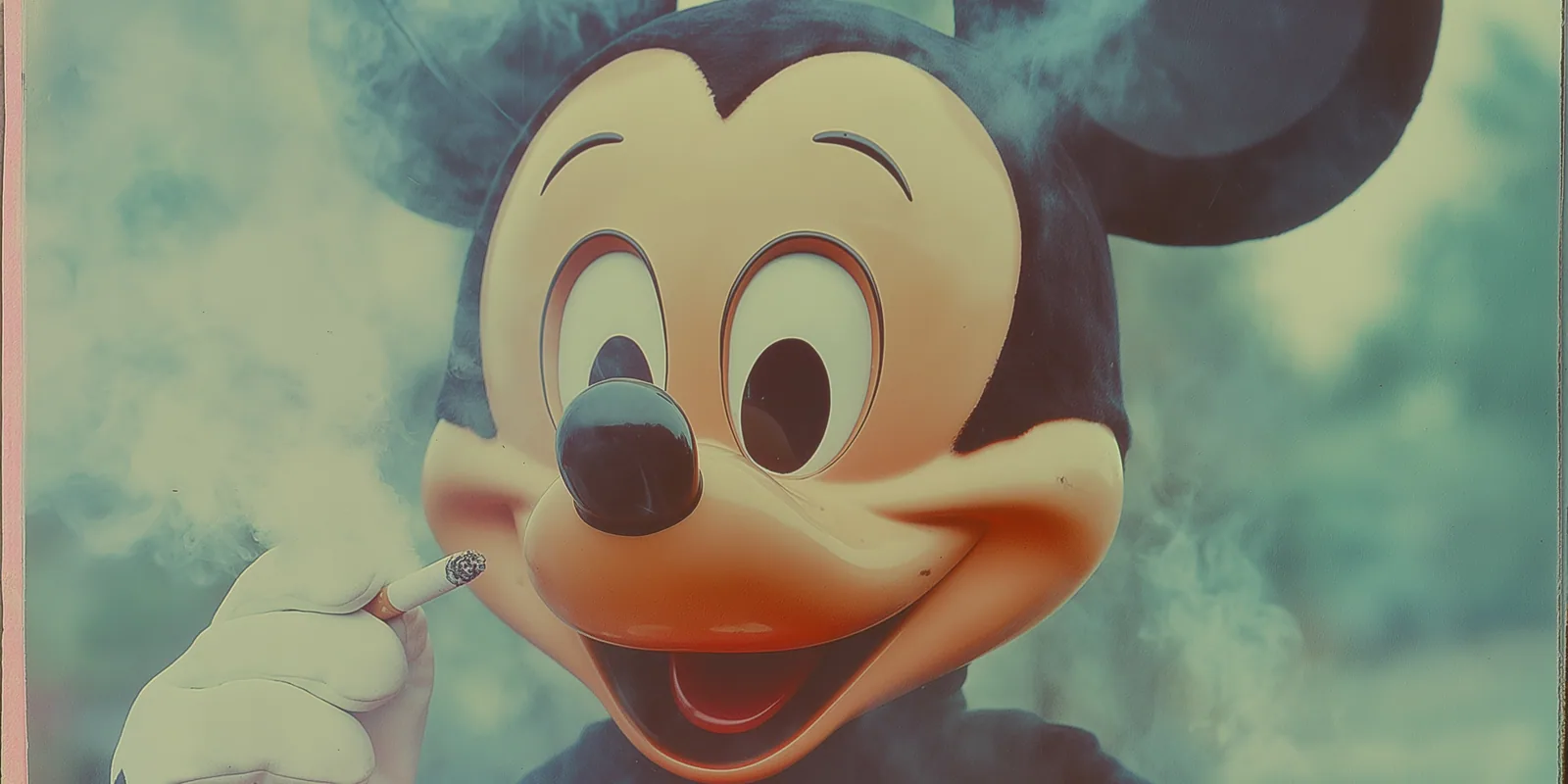
When we think of animation, one name instantly flashes in golden letters in our collective imagination: Walt Disney. More than just a name, it's a legend, a signature, a revolution in itself. The guy who made a mouse talk — and, while he was at it, a whole century.
✏️ Beginnings in pencil strokes and illusions
Born in 1901 in Chicago, Walter Elias Disney was one of those compulsive dreamers who turned sketches into icons. Son of a strict father and a loving mother, he discovered his passion for drawing very early. At 16, he falsified his papers to sign up as an ambulance driver during the First World War. Already, he was bending reality to suit himself.
After the war, he threw himself into the still-fledgling world of animation in Kansas City. There he founded the Laugh-O-Gram studio, which quickly went bankrupt. But instead of giving up, Walt moved to Hollywood with 40 dollars in his pocket, a reel under his arm… and boundless ambition.
🐰 Oswald, Mickey and the birth of an icon
In 1927, Disney created Oswald the Lucky Rabbit (Trolley Troubles), with the backing of Universal Pictures. It was an instant success. But the studio took the character (and his team) away from him without ceremony. Betrayal? A crushing blow? Far worse. But out of that betrayal was born… the cutest revenge in history: Mickey Mouse.
In 1928, Disney released Steamboat Willie, the first cartoon with synchronised sound. Mickey became a legend with a shrill whistle and devastating charisma. With him, Walt had invented not just a mascot but modern pop culture.
🌈 Colour, music and magic
In 1937, Disney dared the unthinkable: an animated feature film. The studios sneered: nobody would sit through an hour and a half of cartoons. Wrong. Snow White and the Seven Dwarfs became a historic triumph. The film grossed 8 million dollars (in the middle of the Great Depression!) and sealed the future of the Disney studio for good.
Then came Pinocchio (1940), Fantasia (1940), Dumbo (1941), Bambi (1942)… Each film was an artistic experiment. Fantasia, for instance, married animation and classical music with rare audacity. A visionary Walt, as much businessman as artist, was leading the dance.
🏰 Disneyland: the dream built for real
But Walt Disney didn't want to stop at the screen. He dreamed of a place where families could live his stories from the inside. In 1955, he opened Disneyland in California. It was a crazy, hugely expensive bet — and it worked. This was no longer cinema; it was the Disney experience.
Through Disneyland, he also invented spatial storytelling: every detail, every set tells a story. It was the forerunner of immersion, long before VR.
🚬 No happy ending… but an eternal body of work
Walt Disney died in 1966, aged 65, of lung cancer. He left behind an empire, dozens of cult films, theme parks, and above all a way of dreaming and storytelling that spread across the whole planet.
Even after his death, his vision kept inspiring. Sleeping Beauty (1959), The Jungle Book (1967), and much later The Little Mermaid (1989) and The Lion King (1994) carried on his legacy.
🎨 Why Disney remains an artistic compass
Walt Disney wasn't just an animator or a producer. He was a conductor of the imagination, an entrepreneur with unmatched instinct, and above all a storyteller of emotions. He proved that drawings could make people laugh, cry and tremble. He turned ideas into childhood memories for entire generations.
And the craziest part? He firmly believed that it all started with a mouse. A mouse, yes — but guided by an extraordinary vision.
📌 References:
- Portrait of Walt Disney – Cineanimation.fr (in French)
- Trolley Troubles (1927)
- Sleeping Beauty (1959)
- Walt Disney Archives
- The Walt Disney Family Museum